
Nikro Air Duct Cleaning in East Harlem: A Homeowner’s Guide
Nikro is a manufacturer of duct cleaning equipment, not a service brand. That distinction matters, because “we use Nikro equipment” is a claim you can actually verify. Most homeowners shopping for air duct cleaning in East Harlem never ask what machine is going into their ducts. They should. Knowing what Nikro’s negative air machines and rotary tools are built to do gives you a benchmark for judging whether a contractor’s pitch holds up or just borrows a name.
If digging into equipment specs isn’t how you want to spend a Tuesday, that’s fine. Call (833) 508-9257 and we’ll walk you through it.
What Is Nikro Equipment, and Why Does the Name Come Up So Often?
Nikro Industries builds professional-grade cleaning equipment: portable negative air machines, HEPA-rated vacuums, rotary brush systems, and the accessories that go with them. It’s the kind of gear you find in the hands of remediation contractors and HVAC specialists, not the shop-vac-and-a-hose setup some generalist crews bring. When a company says it runs Nikro systems, it’s making a technical statement about capability, not a lifestyle claim. That’s rare enough in this trade to be worth paying attention to.
In our experience, homeowners in East Harlem hear the brand name and assume it’s a service company. It isn’t. Nikro sells machines. Anyone can buy one, and some contractors rent rather than own. So the real question isn’t whether a crew mentions Nikro. It’s which machines they actually run, whether those machines are rated for the job at hand, and whether the person running them has put in the hours to know what a properly sealed negative air setup feels and sounds like when it’s working.
- A manufacturer, not a brand of service. Nikro builds equipment that other companies use.
- Professional tier, not consumer tier. These are machines designed for contaminated systems, not quick surface passes.
- Verifiable if you ask. Model numbers and filtration ratings exist. A real contractor can tell you what they run.
Negative Air Machines: CFM and Filtration, Explained Simply
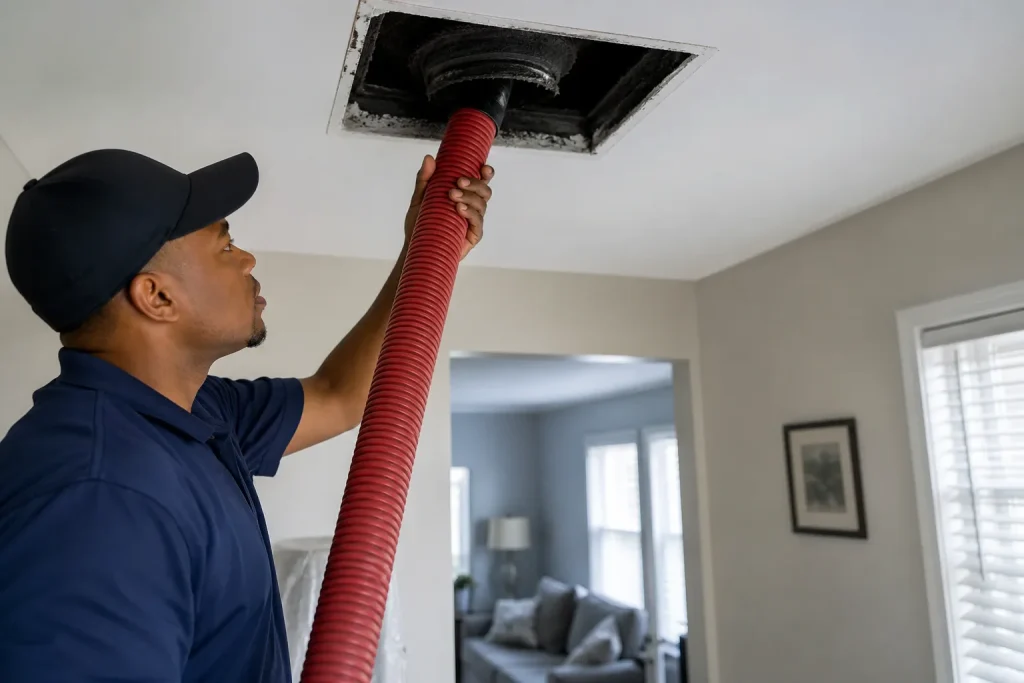
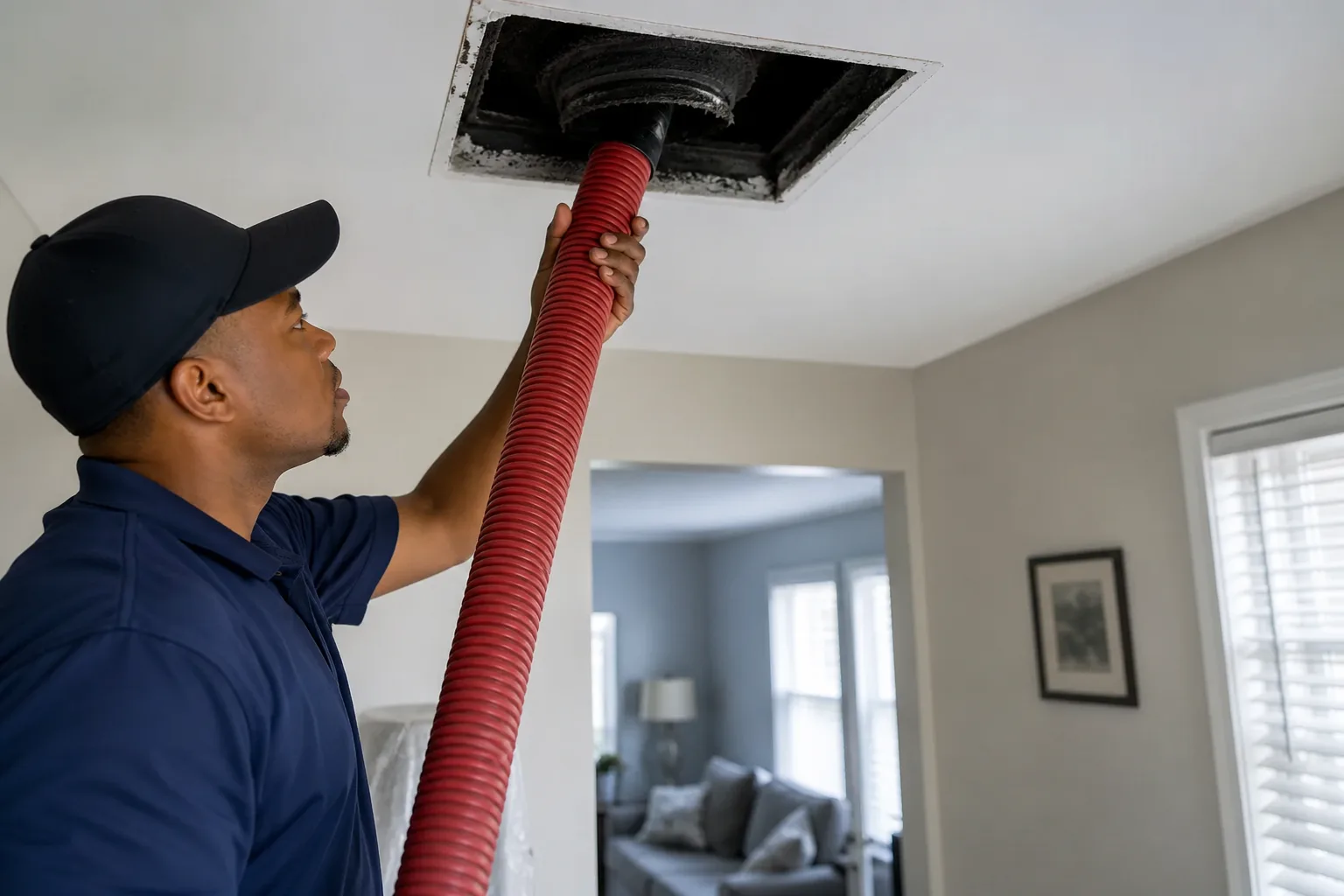
A negative air machine does one job: pull air out of the duct system and hold it under negative pressure so dust, debris, and the loosened material from brushing travel toward the machine instead of into your living room. Two specs decide whether it works: airflow (measured in cubic feet per minute, or CFM) and filtration efficiency. High CFM without proper filtration just moves contaminated air faster. Great filtration without enough airflow can’t keep up with a brush dislodging buildup. You need both.
Why does this matter so much in East Harlem? Duct configurations here often run long and tight, with limited access points and turns that trap debris. A weak machine can’t maintain negative pressure through that. A stronger one can. When the system stays under proper vacuum, the rotary brush loosens material and the machine captures it at the source, which is what “source removal” means. It’s the difference between genuinely cleaning a duct and just blowing dust around inside it.
This is the core of professional-grade equipment versus shortcuts. A shop-vac taped to a vent isn’t a negative air machine. It has no meaningful filtration, no pressure control, and no way to contain what it pulls out. The same tools remediation contractors trust are built for exactly the conditions East Harlem housing tends to present.
HEPA Versus Non-HEPA: Why It Matters More in Older Buildings
HEPA filtration captures particles at a level that ordinary filters and consumer vacuums don’t. During cleaning, this difference shows up in the air you’re breathing while the work happens, not just afterward. A non-HEPA vacuum can exhaust fine particulate back into the room, which is a serious problem if the ducts hold mold spores, allergen load, or debris from a renovation that wasn’t sealed off properly.
East Harlem’s housing stock includes plenty of prewar buildings where ducts have had decades to accumulate whatever the neighborhood threw at them. If anyone in the household has allergies or respiratory sensitivity, containment during cleaning is the part of the service you’ll feel most. Nikro’s HEPA-rated vacuums are designed to hold that particulate inside the machine rather than recirculate it.
This is also where a company’s equipment range matters. We work with Abatement Technologies equipment on jobs that involve contamination, mold risk, or post-construction debris, because those situations call for remediation-level containment, not a standard cleaning pass. And because the same team handles sanitizing afterward, you’re not coordinating two vendors to get from “cleaned” to “clean.” Clean ducts. Sealed ducts. Healthy air. That’s the arc.
Owning Versus Renting: Why Equipment Familiarity Affects the Clean
A contractor who owns their Nikro equipment runs it every week. A contractor who rents it for a job learns its quirks on your dime. That sounds like a small thing until you consider what a negative air system demands: correct hose runs, sealed access points, pressure that holds steady through the whole job, and a technician who notices the moment something slips.
Familiarity is a competence question, not a marketing one. We’ve seen how much faster and cleaner a job goes when the person on the machine knows it cold. Our technicians have up to 15 years of experience, and that time shows most in the small adjustments: where to place the machine, how to seal a return, when to switch from rotary brush to air whip because the duct material calls for it.
What to look for when a company claims Nikro
- Ask for the model. A real answer names a specific machine. A vague answer doesn’t.
- Ask about filtration. HEPA-rated or not, and rated to what standard. If they can’t say, treat the claim with suspicion.
- Ask how the equipment pairs with agitation. Vacuum alone doesn’t clean a duct. It needs a rotary brush or air tool loosening the buildup first.
- Ask whether they own it. Ownership usually signals the equipment gets used regularly.
Portable Nikro Systems Versus Truck-Mounted Rigs in East Harlem
This is where a lot of homeowners get confused. Truck-mounted systems are powerful and fast in the right setting: long, straight duct runs with easy outdoor access. Portable systems give up some raw volume but win in tight spaces, and East Harlem has plenty of tight spaces. Limited-access duct configurations, buildings where the equipment has to come inside and up stairs, apartments with compact mechanical closets: a portable Nikro system is often the right tool here, and a truck-mounted rig the wrong one.
The honest answer is that good contractors use both, matching the tool to the building. If a company only owns one type, ask why. Most residential jobs in East Harlem favor the portable setup, but a large commercial space with long runs might not. When cleaning, repair, and product integration happen together, the equipment choice reflects the plan, not the other way around.
When to call a pro: if you smell mustiness when the system kicks on, see visible debris at supply registers, notice uneven airflow between rooms, or you’re moving into a recently renovated unit where the ducts were open during construction, that’s not a job for a rented shop-vac. Those are signs something needs actual source removal and probably a fresh look at whether the system is sealed. Alongside HVAC cleaning, we handle dryer vent cleaning, because a dryer vent left uncleaned is a fire risk, not just an inefficiency.
Where Aprilaire, Honeywell, and Guardsman Fit In
Cleaning solves the buildup problem. It doesn’t solve a system that’s leaking air, missing filtration, or fighting against a clogged filter setup. Because we work with Aprilaire and Honeywell air quality products, and with Guardsman in the filtration and access space, we can clean and improve the system in a single visit instead of handing you off to someone else. If the cleaning uncovers damaged sections, duct repair and sealing close the loop before the air you just cleaned has a chance to leak out into a crawlspace.
For landlords responsible for tenant air quality, or for property managers keeping a building’s systems on a schedule, that end-to-end coverage is usually the deciding factor. One team, one report on the full picture, no finger-pointing between vendors.
The Bottom Line
“We use Nikro” is only worth something if you can pin it down. Ask for model numbers. Ask about HEPA filtration. Ask how the machine pairs with mechanical agitation, and whether the crew owns the gear or rents it. Those three questions will separate serious equipment from a borrowed brand name faster than any advertisement.
- Nikro builds professional-tier duct cleaning equipment, not consumer gear.
- CFM and filtration both matter; one without the other doesn’t clean a duct.
- HEPA containment is the difference between cleaned air and recirculated particulate.
- Ownership and familiarity affect the quality of the clean.
- East Harlem’s limited-access duct layouts often call for portable systems over truck-mounted rigs.
If you’re in East Harlem and need help, Air Duct Cleaning East Harlem offers free estimates. Call (833) 508-9257. We answer 24/7. Fast dispatch from 7am to 7pm, Sunday through Friday.
Frequently Asked Questions
No. Nikro is a manufacturer of professional duct cleaning equipment, including negative air machines, HEPA vacuums, and rotary tools. Companies that clean ducts use Nikro machines; Nikro doesn’t perform the service. When a contractor names Nikro, they’re describing the equipment they run, which you can verify by asking for the model.
Ask three questions: what model negative air machine goes on the job, whether the vacuum is HEPA-rated, and how the machine pairs with a rotary brush or air tool. A contractor using professional-grade equipment answers directly. One borrowing the brand name gives you a roundabout answer. Call (833) 508-9257 for an exact quote; estimates are free.
Cheap quotes usually mean cheaper equipment, less time, and a surface pass rather than source removal. Untrained crews, shop-vacs instead of negative air machines, no HEPA containment, no agitation tools. The duct looks cleaner at the register; the system isn’t. One flat price per system agreed before work starts, and before-and-after photos of your own ducts, tell you exactly what you paid for.
Ask for before-and-after photos of your own ducts, not stock images. A crew with professional equipment has no reason to skip that step. Pair that with a written price agreed upfront, one flat price per system, and no per-vent surprises, and you’ll know what happened inside your ducts without climbing up there yourself.
Written by the team at Air Duct Cleaning East Harlem.
Need Air Duct Cleaning Help?
Call Air Duct Cleaning East Harlem - the local pro we connect you with is licensed and insured, with free written estimates in East Harlem.
(833) 508-9257