
Last updated November 22, 2026
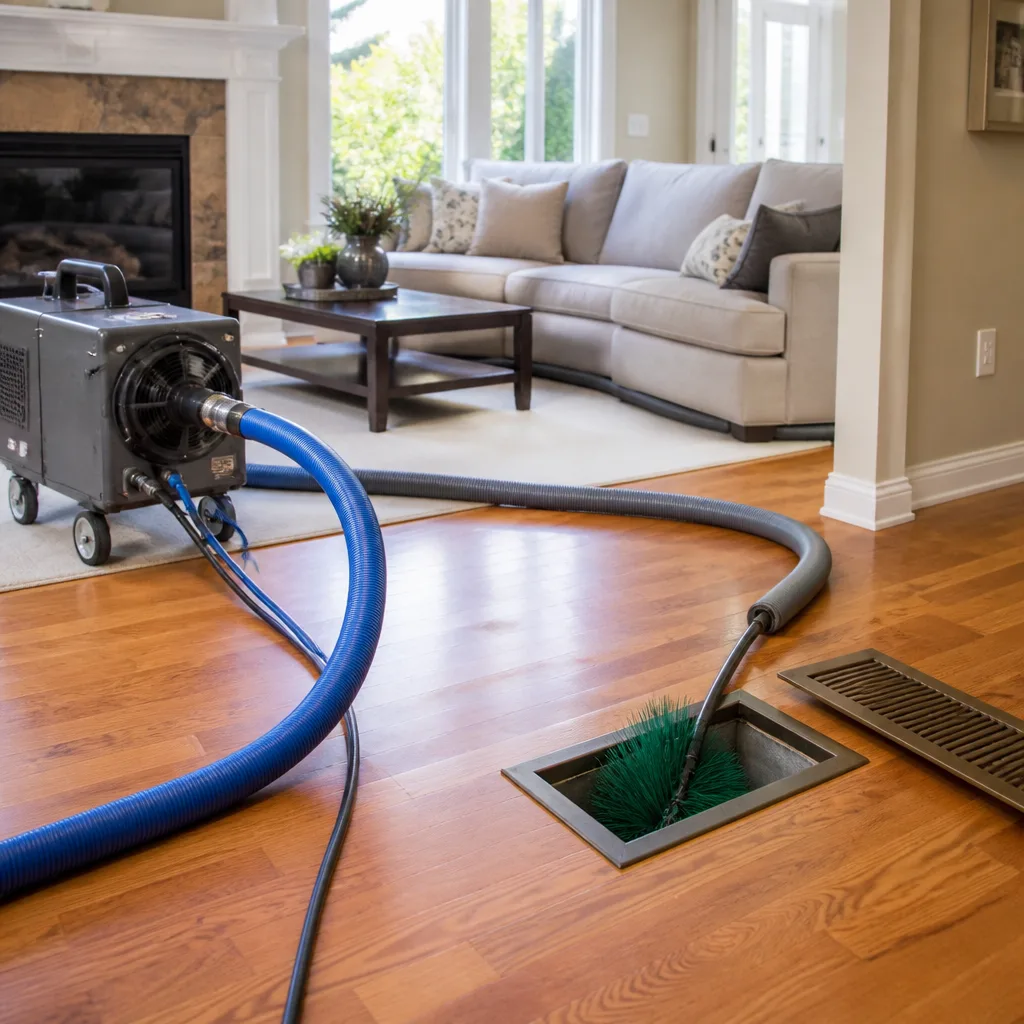 Whole-home duct cleaning
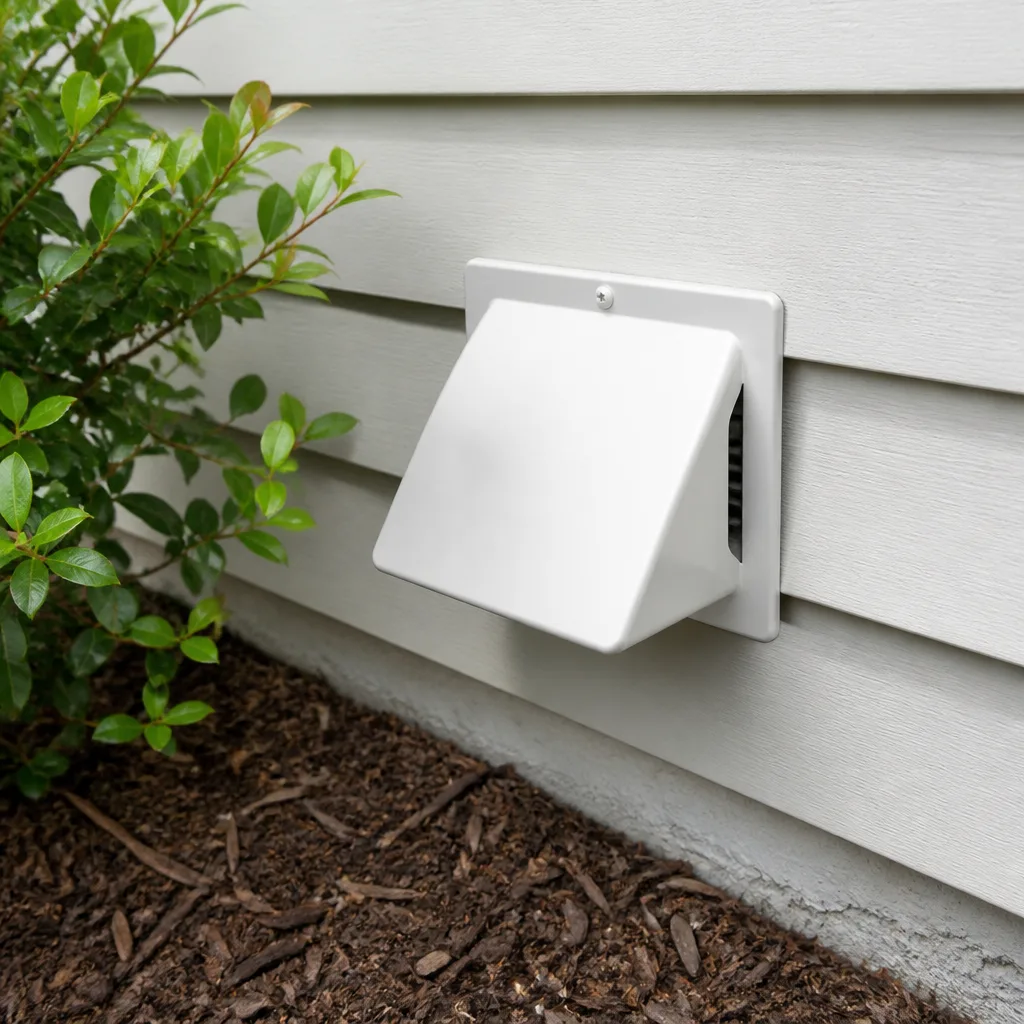 Dryer vent cleaning
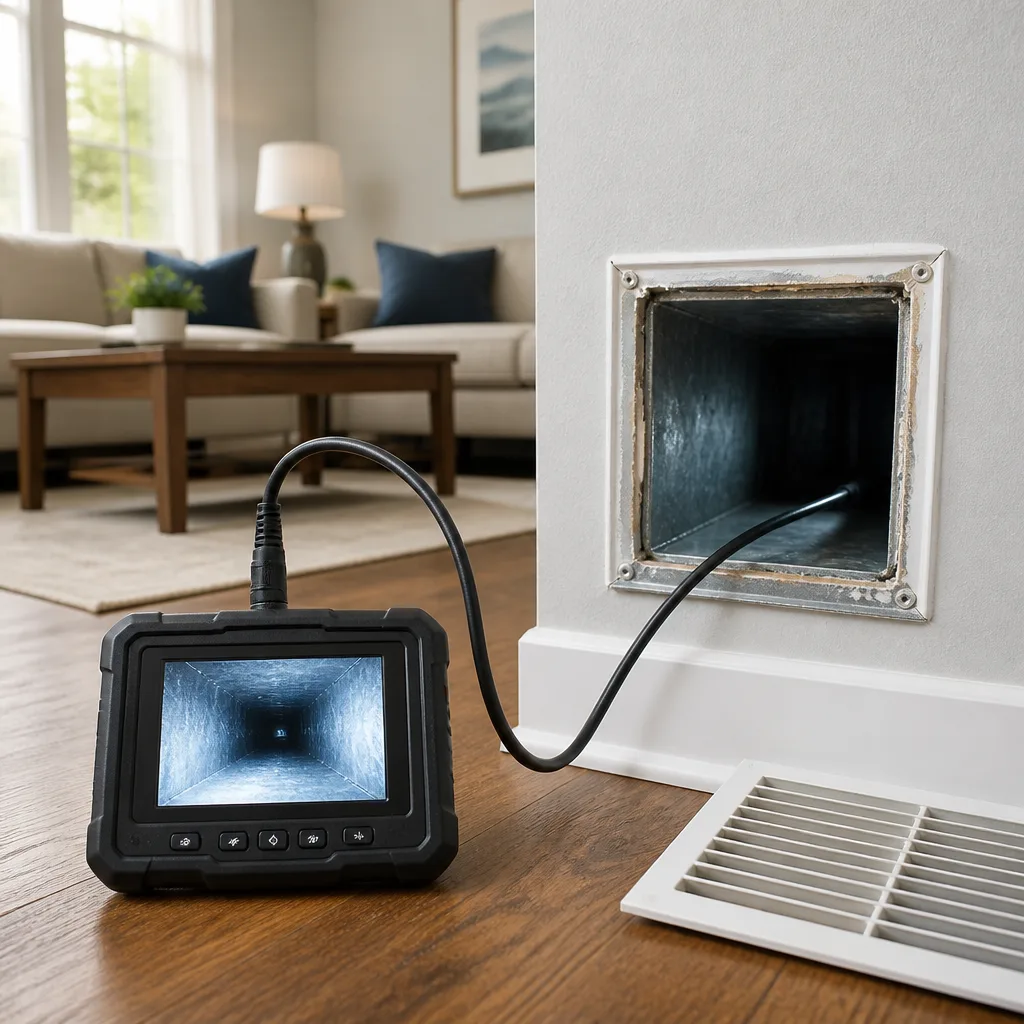 Camera inspection
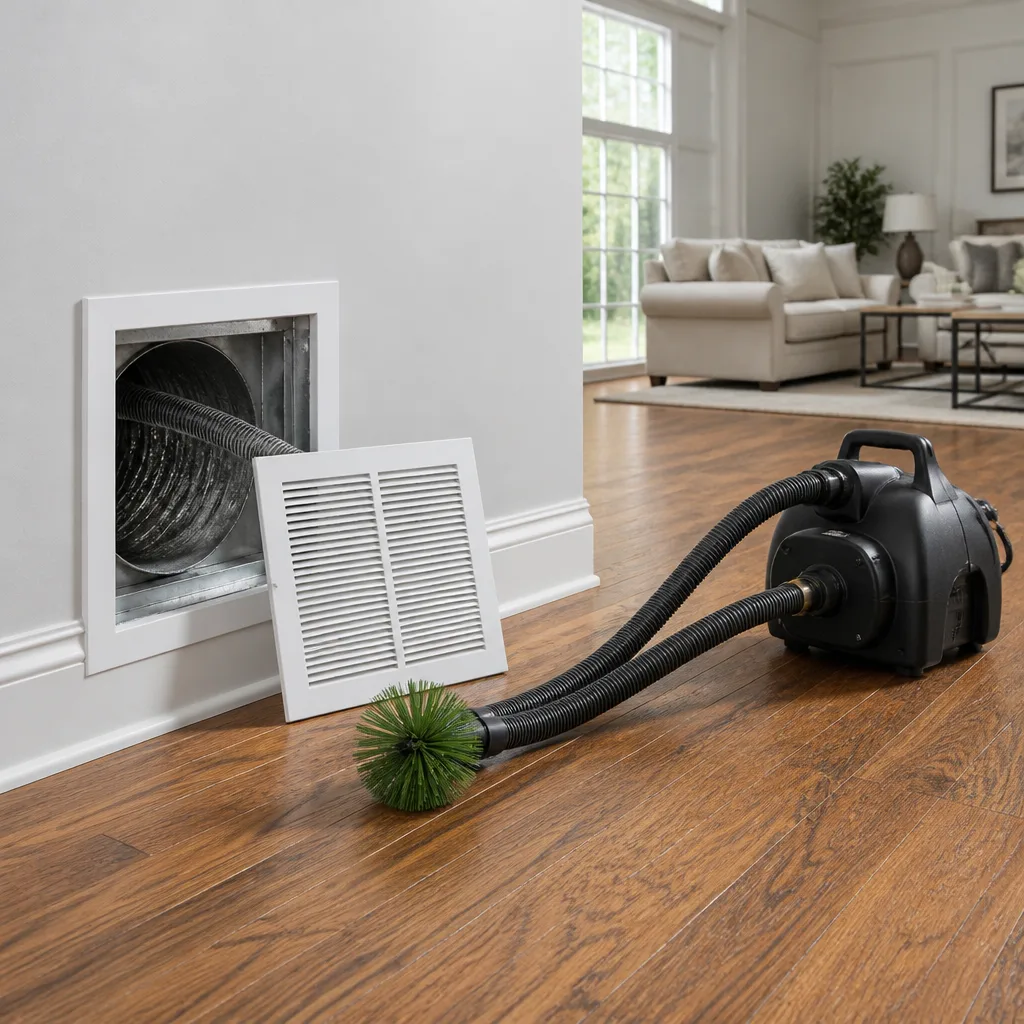 Sanitizing & deodorizing
Whole-system duct and dryer vent check with before-and-after photos - you see exactly what came out of your vents
That "$99 whole-house special" is a bait ad - the real number appears once they are in your hallway, or the "clean" is a shop-vac at the register. We photograph the inside of your ducts before and after instead.
How to Hire an Air Duct Cleaning Contractor in East Harlem: A Step-by-Step Guide
Most homeowners shop for duct cleaning the way they shop for a haircut: cheapest quote wins. That approach gets expensive in East Harlem’s older buildings, where a low-bid crew with a shop-vac and a shop-vac-sized understanding of HVAC systems can leave your ducts exactly as dirty as they found them, minus the invoice amount. Here’s the counterintuitive part: the single most revealing question you can ask a contractor before hiring costs nothing. “What’s the static pressure your vacuum collection unit operates at?” If they can’t answer in CFM or inches of water column, walk away. This guide walks you through a technical vetting framework that separates professional-grade service from a marketing-grade pitch, so when you hire an air duct cleaning contractor in East Harlem, NY, you know exactly what you’re paying for.
Quick Answer
To hire an air duct cleaning contractor in East Harlem, verify three things before you sign anything: the equipment specs (ask for CFM and negative pressure, not just brand names), the technician’s actual NADCA certification status (membership alone is not certification), and a written scope of work that names every access point and the containment protocol. A legitimate contractor will walk your system before quoting, provide documentation after the job, and give you one flat price per system agreed before work starts. Anyone who quotes a firm number over the phone without seeing the ducts is selling you a coupon, not a cleaning.
Styles & brands we work with
- Whole-home duct cleaning
- Dryer vent cleaning
- Camera inspection
- Sanitizing & deodorizing
Table of Contents
- What Equipment Specs Should You Actually Ask For?
- How Do You Verify NADCA Credentials?
- What Should a Pre-Job Inspection Cover?
- What Should the Written Contract Include?
- Why East Harlem Buildings Need Special Consideration
- What Are the Red Flags to Watch For?
- Why Dryer Vent Cleaning Belongs in the Conversation
- How Do You Verify the Work Was Actually Done?
What Equipment Specs Should You Actually Ask For?
Equipment is where the low-bid market lives or dies, and it’s where most homeowners get fooled by vocabulary. A crew can say “negative pressure” and “HEPA filtration” in the same breath as a legitimate contractor, but the numbers behind those words tell the real story. When you’re vetting a duct cleaning company in East Harlem, ask for specifics rather than brand names, and listen carefully to how they’re answered.
Truck-mounted collection units and portable negative pressure units deliver very different performance profiles. Truck-mounted systems typically move more air and are the standard for large commercial jobs and heavy contamination. Portable units vary enormously in quality. An Abatement Technologies unit is built for remediation-level work: mold-affected systems, post-construction debris, compromised ductwork. A shop-vac with a long hose is not in the same category, no matter how the truck is lettered.
Here’s what to ask, and why each answer matters:
- “What CFM does your vacuum collection unit move, and what negative pressure do you hold in the system during cleaning?” A real answer comes in cubic feet per minute and inches of water column. Silence or a vague “it’s powerful” is your cue to move on.
- “What machine are you running?” Rotobrush and Nikro systems are the platforms certified HVAC and remediation contractors use. They’re not shop-vac retrofits. If a contractor can name the machine and explain how it agitates and collects, you’re talking to someone technical.
- “Do you carry equipment for contaminated systems?” Abatement Technologies equipment signals capability beyond a routine cleaning. In an East Harlem walk-up where supply lines may run through decades-old chases, contamination is a real possibility, and you want a contractor who can handle it.
- “Do you run a HEPA filter and where does the exhaust vent?” Collection is only half the job. Where the exhaust goes determines whether you’re breathing the debris during the cleaning.
None of this is exotic. A professional-grade crew can answer every question in plain language. The ability to answer is the whole point. For a deeper look at how a proper air duct cleaning job runs on equipment like this, our service page covers the process step by step.
How Do You Verify NADCA Credentials?
NADCA membership and NADCA certification are two different things, and the gap between them matters. Membership means a company paid dues and agreed to a code of ethics. Certification means an individual technician passed an exam and maintains continuing education. Any contractor can be a member. Certification belongs to a person who can prove it, and a company that takes the trade seriously will have certified technicians on the crew doing your work.
Verification takes about five minutes, and it’s worth doing before anyone walks into your building:
- Ask which technician will be on-site and whether that person holds NADCA certification. Not the company. The individual. If nobody can answer, that’s information.
- Ask for the certification number and check it against the NADCA directory yourself. Don’t take a business card as proof.
- Ask what scope of work that certification covers (source removal, HVAC system cleaning, or both).
- Ask whether the crew follows the NADCA assessment, cleaning and post-cleaning verification steps, and get it in writing if possible.
While you’re on the phone, ask for proof the crew has worked on buildings like yours. East Harlem has a lot of pre-war walk-ups and larger apartment buildings with shared mechanical risers, and those systems behave differently from a suburban ranch house. Contractors who are careful with certification tend to be careful with everything else. That’s the pattern we’ve seen across the work we’re called to evaluate and correct.
One more thing: credential verification is also your best defense against bait-and-switch. A certified technician has something to lose. A crew that shows up with a coupon and no credential doesn’t.
What Should a Pre-Job Inspection Cover?
A legitimate pre-job inspection takes 20 to 40 minutes and involves a flashlight, a camera, and a willingness to get into the mechanical closet. If a contractor quotes you a flat price over the phone without walking the system, treat that as a hard stop. It’s not efficiency. It’s a pricing model built on what the invoice can become once the technician is inside your apartment.
Here’s what a thorough inspection of an East Harlem duct system should include:
- Walk the full system, not just the registers. Supply and return sides, the air handler, the plenum, every accessible trunk line.
- Photograph the duct interiors before cleaning. A real contractor documents what they find so the “after” photos have something to compare.
- Check the air handler and coil for dust loading and moisture. A dirty coil and a dirty duct are a package deal.
- Look for leaks, disconnected joints, and crush damage in sheet metal and flex duct runs. These are repair items, and they should show up in the quote rather than surprise you mid-job.
- Assess access. In older East Harlem buildings, ducts often run through tight chases and above-drop ceilings where registers aren’t in typical positions. A contractor who doesn’t look at access before quoting will either cut the wrong holes or skip sections of the system.
- Ask about shared risers or common mechanical space. In multi-unit buildings, you want to know exactly which ducts are yours and which are the building’s.
A proper inspection also gives you the anchor for a flat price per system. The number should reflect what’s actually in your walls, not a hopeful guess. If you’re looking at a bigger building, our HVAC cleaning page covers how those jobs differ from a single-apartment cleaning.
What Should the Written Contract Include?
If the scope of work isn’t written down, it isn’t happening. Verbally promising to “clean everything” is not a scope. Anyone can promise everything before the work starts and reinterpret “everything” once the machine is running. A written contract is the place where the technical framework gets pinned to paper.
Insist on the following language before the first access point is opened:
- Scope: which components are being cleaned (supply, return, plenum, air handler, coil, registers, diffusers), and which are explicitly not included.
- Access points: where the crew will open the system, how many cuts, and whether any repairs to the finished surfaces are included after the work.
- Containment protocol: how dust and debris are kept out of your living space (negative pressure, plastic barriers, HEPA exhaust routing), and what the crew will do if the system isn’t set up for containment.
- Equipment: the machine they’re bringing and the vacuum collection specification. If it wasn’t written in the estimate, ask for it in writing.
- Repair and sealing scope: any leaks or damaged joints identified during inspection, and whether they’ll be sealed the same visit or quoted separately.
- Sanitizing: which product, applied where, and whether it’s appropriate for the contamination level found.
- Post-job documentation: before-and-after photographs of the ducts, any air quality readings, and a written summary of what was found and what was done.
- Price: one number per system, agreed before work starts. Not a per-vent price. Not a coupon that “applies” once the technician is on site. If the scope changes because inspection turns up something unexpected, it gets a written change order, not a verbal upsell.
Duct repair and sealing belong in the same document. Leaks and gaps found during cleaning are best fixed while the system is already open, and sealing them protects HVAC efficiency long after the crew leaves. That’s the reason we handle cleaning, repair, sealing and sanitizing as a single visit: clean ducts, sealed ducts, healthy air, done in one job rather than three.
Why East Harlem Buildings Need Special Consideration
East Harlem is not a market where you can drop a suburban checklist into a 1920s walk-up and call it done. The neighborhood’s housing stock is old, the duct runs are creative, and access is often the whole job. A contractor who hasn’t worked these buildings will either underestimate the work or skip it entirely.
Here’s what deserves attention in East Harlem specifically:
- Aging mechanical systems. Ductwork in older buildings is often a mix of original sheet metal and later flex additions, and the transitions between them are where leaks and dust loading concentrate.
- Shared risers and common systems. In buildings with shared returns or common mechanical space, defining which ducts are yours is the first step in any legitimate scope.
- Limited access configurations. Low ceilings, drop soffits, and chases without service panels mean access has to be planned, not improvised. A crew that plans access will quote the whole system. A crew that doesn’t will clean what’s easy and report “done.”
- Post-renovation debris. The neighborhood’s steady stream of apartment renovations leaves construction dust in ducts. That’s a different cleaning job, and it calls for remediation-level equipment rather than a routine pass.
- Dust from the city itself. Street-level air and continuous construction adjacent to residential blocks mean the dust load in East Harlem ducts runs high. It’s one reason periodic cleaning earns its keep here.
When a contractor quotes a cleaning in East Harlem, ask them what they expect to find on this block, in this building age, with this access. Their answer tells you whether they know the neighborhood or just the postcode. In our experience, contractors who know the building stock in East Harlem quote differently and clean systems other crews avoid. For the technical overview of what a full system cleaning covers, air duct cleaning lays out the process in detail.
What Are the Red Flags to Watch For?
The duct cleaning trade has a well-earned reputation problem, and every red flag below turns up regularly in East Harlem. Learning to spot them takes one phone call.
A quote without an inspection. If the price is fixed before anyone sees your system, the contractor is pricing the invoice, not the job. The coupon price is the start of the negotiation, not the total.
Per-vent pricing. A per-vent model rewards cutting extra holes and charging for each one. A flat price per system is the only model that lines up with cleaning the system properly.
No equipment specifications. “We use professional-grade equipment” is a marketing phrase. Every legitimate contractor can name the machine, the CFM, and the negative pressure. Ours run Rotobrush and Nikro systems, the same platforms certified HVAC and remediation contractors use, and we’re happy to talk specs before the truck rolls.
No post-job documentation. If nobody photographs your ducts before and after, you have no way of knowing what was actually cleaned. Before-and-after photos of your own ducts should be standard, not a request.
Credentials on the truck rather than on paper. NADCA membership stickers don’t certify the technician. Ask for certification numbers and verify them.
An upsell that arrives mid-job. A technician who finds “something concerning” after the machine is running and quotes a large add-on on the spot is following a sales script. Legitimate contractors build the scope into the written estimate after the inspection. If a new problem surfaces, it’s documented and quoted in writing before work continues.
No plan for dryer vents. A duct-only specialist usually skips the dryer vent entirely. In a dense building like the ones across East Harlem, a clogged dryer vent is a fire risk that belongs in every duct assessment.
Why Dryer Vent Cleaning Belongs in the Conversation
Dryer vent cleaning is the quiet safety service that most duct specialists skip. A dryer vent is a lint trap that runs from your machine to the outside of the building. When lint builds up over time, the dryer works harder, and a clogged vent becomes a fire path. That’s why the NFPA lists dryer-related fires among the most common residential fire causes, and why we treat dryer vent cleaning as a safety service, not an upsell. In a building with shared vent runs or an exterior wall that sees heavy use, the accumulation can be significant, and the fix is straightforward.
When you hire a duct cleaning contractor, ask if they’ll inspect the dryer vent at the same time, and whether they have the equipment to clear it. A vent run that’s too long, has too many bends, or terminates in a screen that traps lint needs attention. The same professional-grade equipment that cleans your ducts handles the vent run. Getting it done in the same visit means you’re not scheduling a second contractor for a fire-risk item.
How Do You Verify the Work Was Actually Done?
Verification is where low-bid crews unravel. If the work isn’t documented, the customer has no way of knowing whether anything more than cosmetic vacuuming happened, and by the time they figure it out, the crew is gone. Here’s what a legitimate post-job handoff looks like:
- Before-and-after photographs of your own ducts, not a generic company photo set. If they can’t show you the interior of your system before and after, ask why.
- A written summary of what was cleaned and any repairs or sealing performed, with the access points listed.
- Before-and-after air quality readings if a reading was taken before the work, which any serious contractor should have.
- Documentation of anything found but not cleaned (a compromised section of duct, a rusted plenum) so you know what to fix next.
- A walkthrough with the technician that answers your questions before they pack up.
One more verification step applies specifically to East Harlem buildings: confirm before the crew leaves that every access point has been restored and every register is back in place. In apartments where ducts run through tight chases, a missed ceiling panel becomes a leak risk the next time it rains. A professional crew checks its own work before it closes the door. That’s the difference between professional-grade work and a visit that looks clean from inside the kitchen.
See the difference
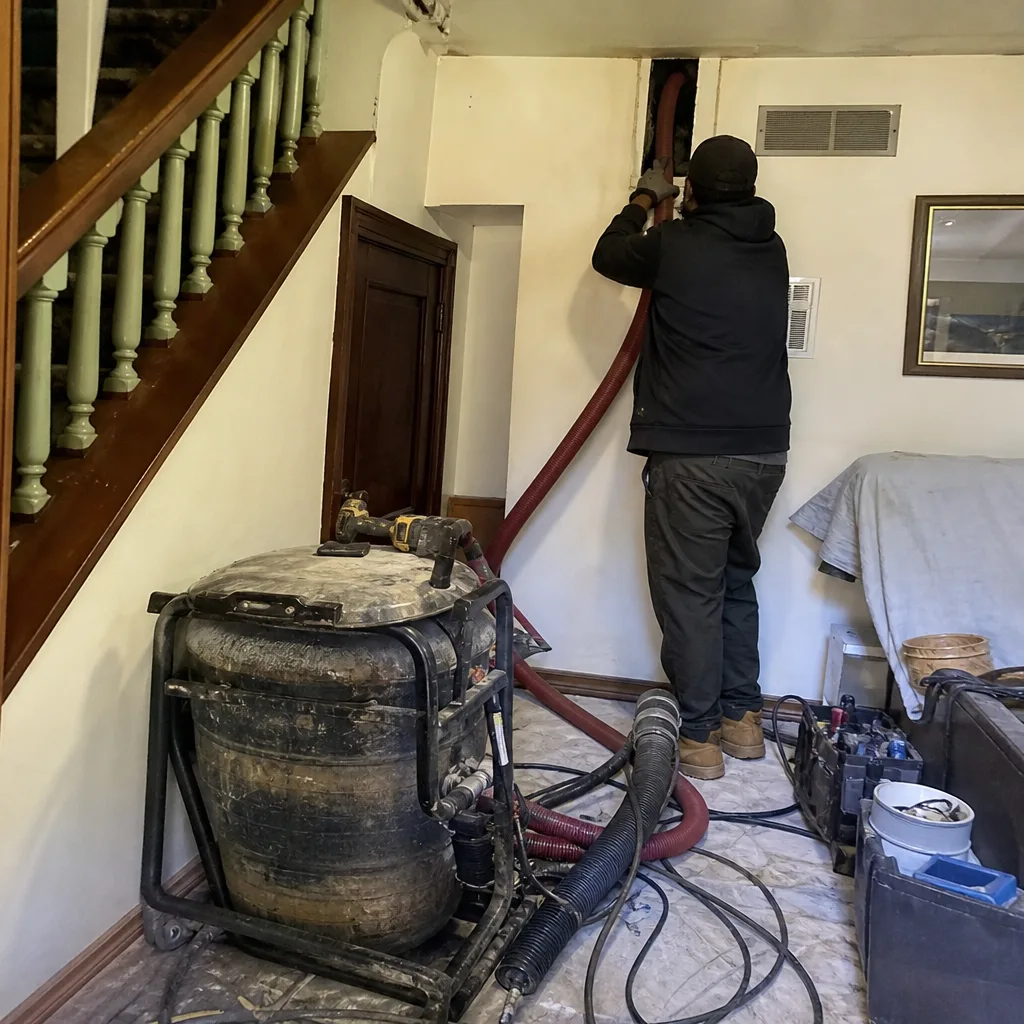 Before
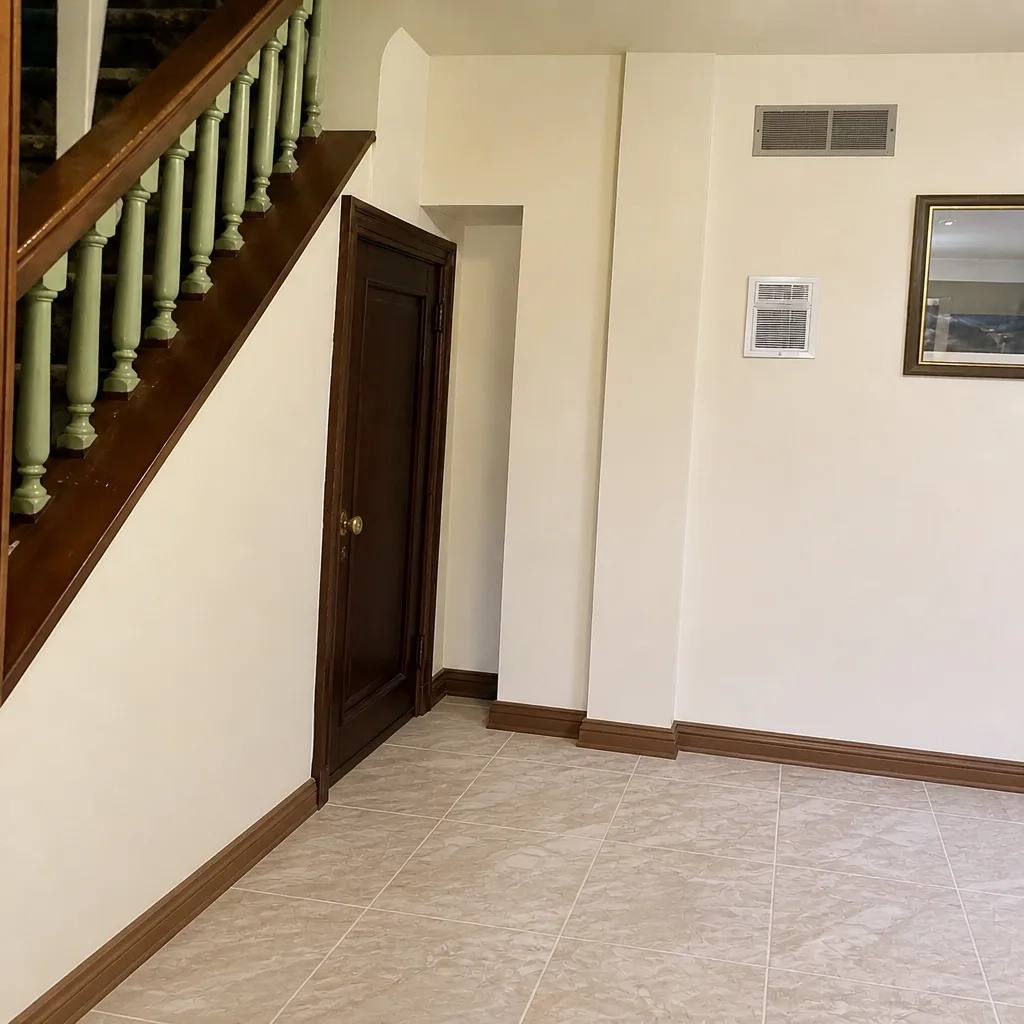 After
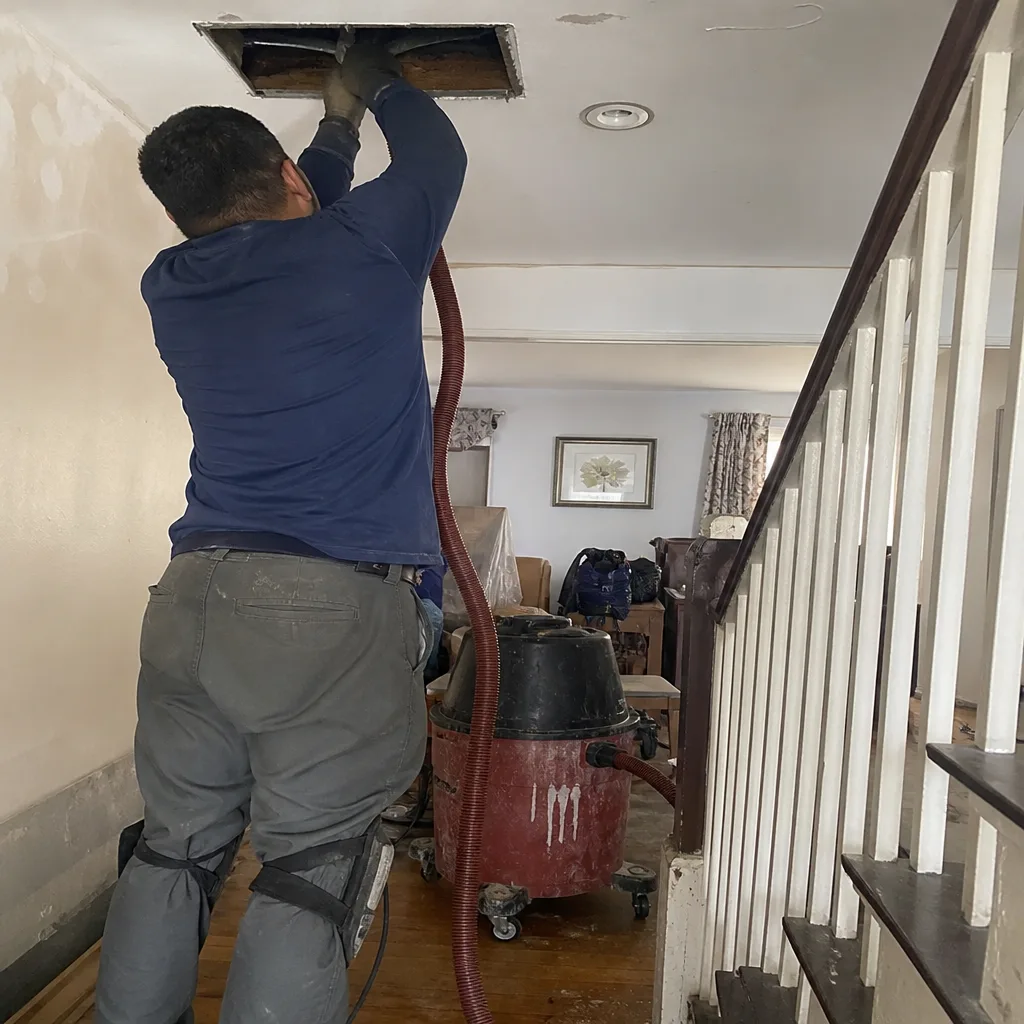 Before
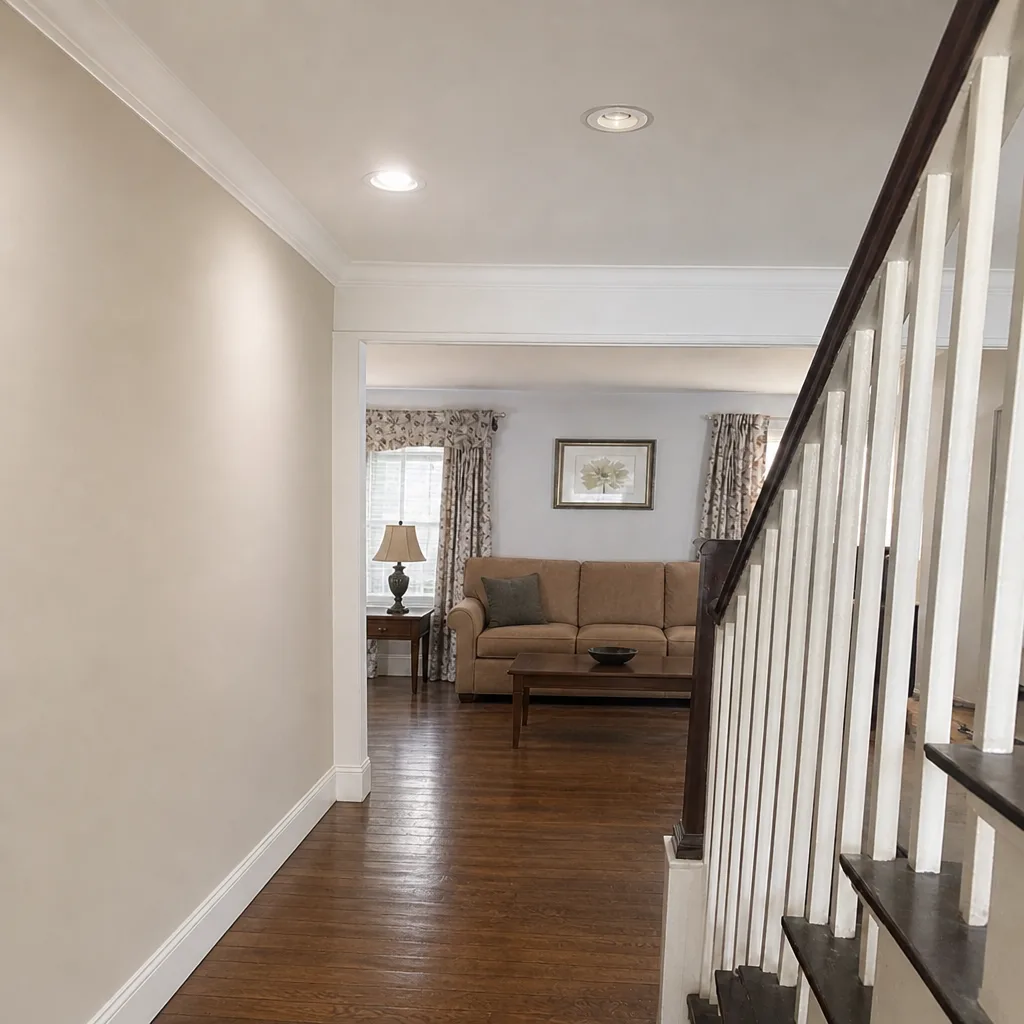 After
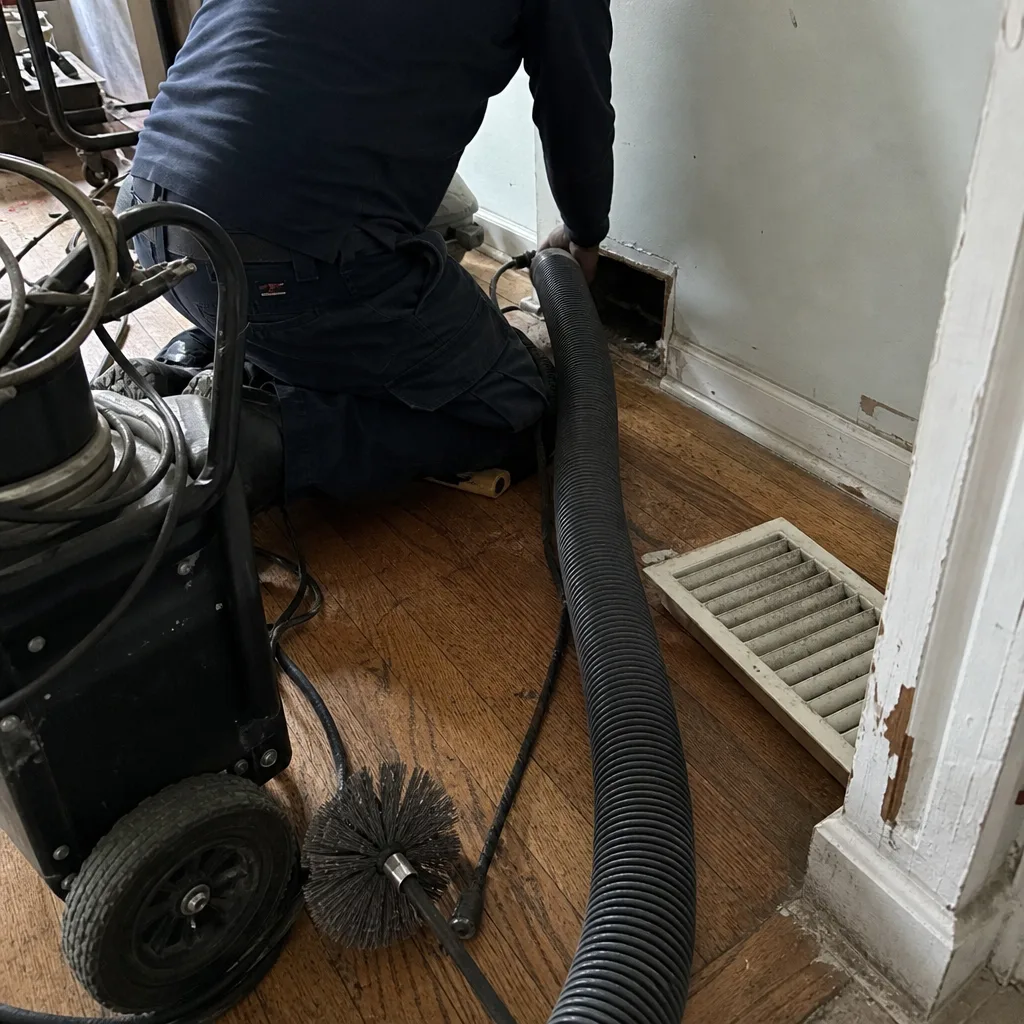 Before
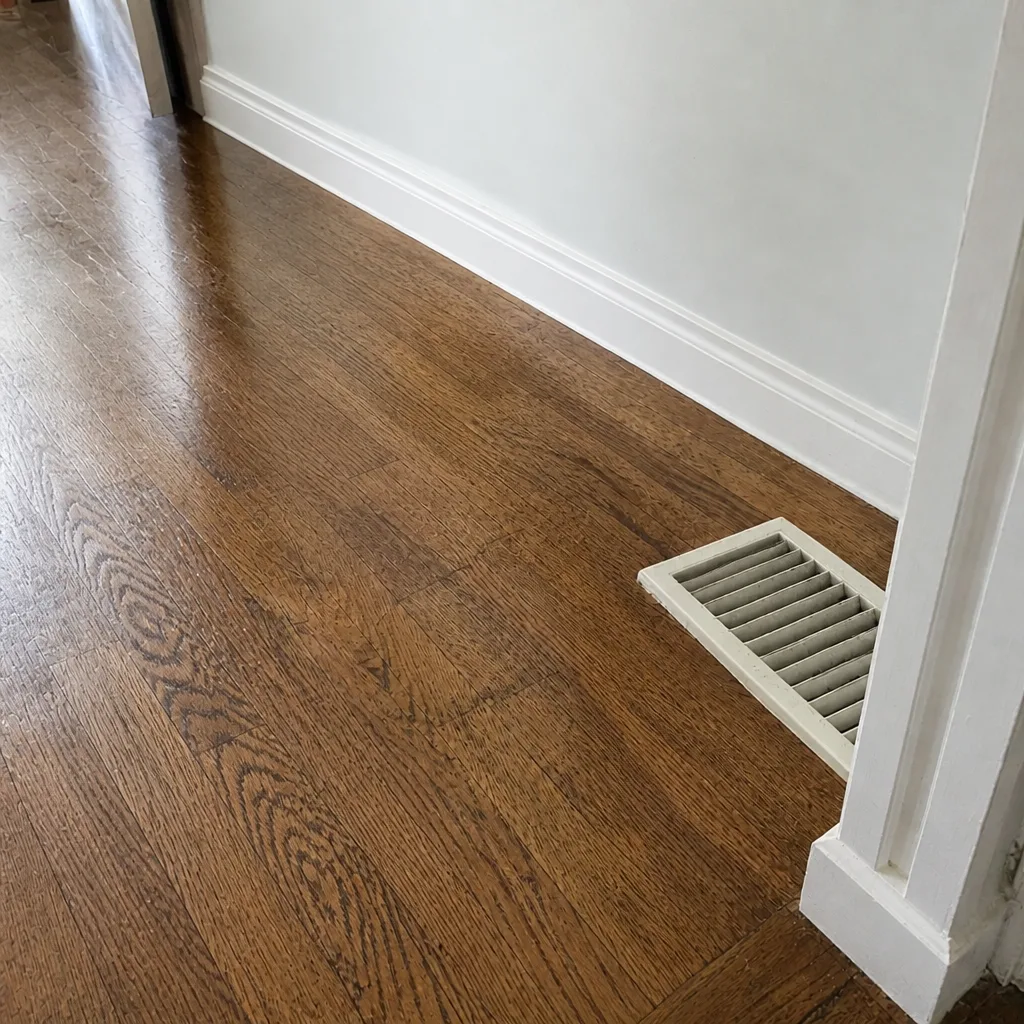 After
Common Mistakes to Avoid
- Calling the cheapest number first. The low quote is designed to get a technician into your apartment. The technician then finds “problems” that justify the invoice. Start the call with equipment and certification questions instead of price, and the quoted price in the end will be closer to the truth.
- Hiring a generalist handyman for duct work. Duct cleaning is a specialized trade with specialized tools. A handyman with a shop-vac is not a duct cleaner, and the equipment difference is the reason the results differ. A crew with Rotobrush or Nikro systems and Abatement Technologies equipment is doing a different job than a generalist with a vacuum hose.
- Skipping the pre-job inspection appointment. The inspection is what makes the flat price meaningful. If a contractor won’t inspect first, they’ve told you their pricing model before you signed anything.
- Accepting a per-vent quote. Per-vent pricing encourages holes in places you didn’t ask for. A flat price per system is the only quote that stays honest under pressure.
- Forgetting the dryer vent. A duct-only specialist will clean your supply and return and ignore the biggest fire risk in the apartment. Dryer vent cleaning is part of the assessment in any East Harlem building, where vent runs are long and often shared.
- Failing to confirm shared risers before work starts. In buildings with common mechanical space, a crew that cleans the wrong ducts has cleaned nothing. Ask which runs are yours and get it in writing.
- Not asking for before-and-after photos of the ducts themselves. A clean register doesn’t mean clean ducts. The only evidence that matters is the before-and-after photo from inside the duct run.
When to Call a Professional
If you’ve read this far, you know the framework. When do you actually pick up the phone? Allergies that worsen when the system runs, a musty smell coming from the vents, visible dust blowing out of a register, and uneven airflow between rooms all point to a duct system that needs a proper look. Renovation dust sitting in the system after a kitchen or bathroom gut is another reason, and so is a dryer that takes longer to dry a load than it used to. In a dense neighborhood like East Harlem, shared risers and older building systems add reasons of their own. Air Duct Cleaning East Harlem offers free estimates in East Harlem, and we’ll walk the system, explain what we find, and give you one flat price per system before any work starts. Call (833) 508-9257. We answer 24/7. Fast dispatch from 7am to 7pm, Sunday through Friday.
Frequently Asked Questions
A full-system air duct cleaning in East Harlem is priced per system by a written estimate, and the estimate reflects the system’s actual condition, access and size, not a base rate on a coupon. Because pricing is per job by estimate and the estimate is free, call (833) 508-9257 so we can see the system you’re asking about. The written estimate sets the final price, and there’s no per-vent billing on top.
Cheap quotes are cheap because the equipment and the work are cheaper. A shop-vac, a hose, and a couple of registers can justify a low number and an impressive invoice once the technician is on site, and that’s the bait-and-switch model the industry is known for. Professional-grade equipment (Rotobrush, Nikro, Abatement Technologies) and a pre-job inspection cost more to run, and they’re what makes the difference between cleaning and vacuuming. The right way to compare quotes is to compare their equipment specs and scope, not their prices. Call (833) 508-9257 for a free estimate of what your system actually needs.
Check certification, not membership. Membership is a company-level dues-paid status; certification belongs to an individual technician who passed an exam and keeps up with continuing education. Ask which technician will be on-site, their certification number, and verify it directly. It takes a few minutes and it’s the single best filter against a crew that says the right things on the phone and brings the wrong equipment. When you’re ready to compare estimates, call (833) 508-9257 – the estimate is free.
You ask for before-and-after photographs of your own ducts, a written summary of what was cleaned and repaired, and access points restored. A contractor who documents the before image has nothing to fear from the after image. If a crew can’t show you the interior of your system before and after, you have no evidence the job happened. Ask before you book – and for a free estimate that includes a full pre-job inspection, call (833) 508-9257.
Most homes in East Harlem benefit from a cleaning every three to five years, but the honest answer depends on the building. Construction dust from nearby renovations, a pet, allergies in the household, or a system that’s been running with visible dust at the registers can all shorten that interval. The better rule is to inspect rather than guess. If the ducts look dirty when you look into a register, treat that as a prompt. Call (833) 508-9257 for an inspection and estimate – they’re free.
Because a clogged dryer vent is a fire risk, and most duct-only specialists skip it. We treat dryer vent cleaning as a safety service alongside the duct work, and we can clear the vent run in the same visit. If your dryer takes longer to dry a load or the laundry room feels hot, the vent is worth checking. Call (833) 508-9257 and ask for the vent to be looked at alongside the ducts.
Can you clean ductwork in an older East Harlem building with limited access?
Yes, and that’s the case where equipment and planning matter most. In older buildings with tight chases, drop ceilings and shared risers, access has to be planned during the inspection, and the scope has to name every access point before work starts. A crew that quotes the whole system after walking the building is doing the job properly. Call (833) 508-9257 to arrange the inspection and estimate.
The Bottom Line
Hiring a duct cleaning contractor in East Harlem comes down to three verifications: equipment specs you can hear in CFM and inches of water column, technician certification you can check against the NADCA directory, and a written scope that names every access point, containment protocol and post-job photograph. Price comes after all three, and it should be one flat number per system agreed before work starts. The $99 coupon is not a deal. It’s the opening move in a negotiation that ends with a bigger invoice. Get the inspection first, get the scope in writing, get the photos of your own ducts afterward. For a free estimate in East Harlem from a team that runs professional-grade Rotobrush, Nikro and Abatement Technologies equipment, call (833) 508-9257. We answer 24/7. Fast dispatch from 7am to 7pm, Sunday through Friday.
Written by the team at Air Duct Cleaning East Harlem.